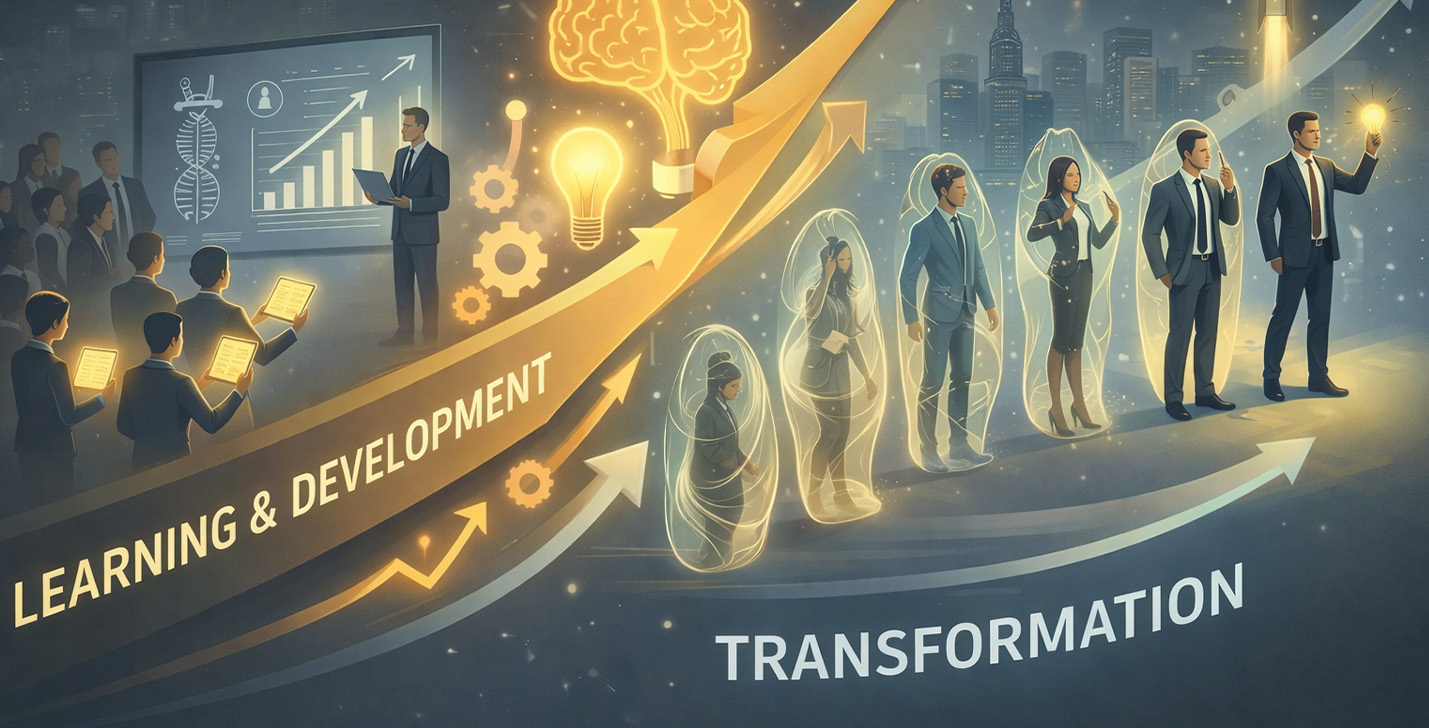
Beyond Training: How Learning and Development Drives Real Transformation
By Patricia Abena Kissi
Over the years, my understanding of Learning and Development has shifted significantly. It is no longer about organising training programmes, workshops, or issuing certificates. In today’s workplace, organisations are under increasing pressure to demonstrate that learning leads to real change in behaviour, productivity, performance, and business outcomes. In my experience, leaders are no longer impressed by how many people attended a session. What they want to know is whether people are working differently because of it. This expectation is not misplaced. Research shows that organisations that invest strategically in learning are better positioned to adapt, innovate, and remain competitive in uncertain environments (Deloitte, 2024).
Yet in many organisations I have worked with, particularly across Africa, a familiar pattern persists. Training budgets are approved, sessions are delivered, participants report high satisfaction, and very little changes happen afterward. Employees return to their desks and revert to old habits. I have seen organisations run the same training year after year, hoping for different results. This experience has reinforced a simple truth for me. Training activity on its own does not translate into capability or performance. For learning to make a difference, it must be relevant, contextual, and intentionally connected to the realities of work.
One of the most common gaps I encounter in Learning and Development is the failure to start with the business problem. Too often, training is introduced because a gap has been identified, but there is little clarity on the specific behaviours that need to change or how success will be measured. In practice, this leads to well-designed programmes that struggle to gain traction. The Kirkpatrick Model has been particularly useful in helping organisations reframe this thinking. By focusing attention beyond participant reactions and knowledge acquisition to behaviour change and results, it encourages more disciplined design and evaluation (Kirkpatrick & Kirkpatrick, 2006). I have found that when learning is designed with these outcomes in mind, leadership engagement increases and learning conversations become more strategic.
I have also learned that effective Learning and Development requires a deliberate shift from knowledge transfer to capability building. Most adults do not struggle with access to information. They struggle with applying what they know in complex, real-world situations. In my work, the most impactful learning experiences have been those that allow participants to practise, reflect, and receive feedback. Case discussions, coaching, mentoring, simulations, and project-based assignments consistently outperform lecture-style training. IBM’s learning ecosystem provides a useful reference point here. Through its integrated “Your Learning” platform and internal credentialing system, IBM combines formal learning with on-the-job development and peer learning, while using data to track skills growth and mobility (Qin & Kochan, 2021). What stands out to me is not the technology itself, but the intentional way learning is embedded into work and career progression.
Context has proven to be equally critical, especially within African organisations. I have seen well-intentioned programmes fail simply because they did not reflect local leadership styles, organisational cultures, or operational constraints. Successful organisations tend to adapt global frameworks to local realities rather than importing them wholesale. MTN Ghana’s Skills Academy illustrates this well. Designed to build digital and employability skills among young people, the initiative combines online learning with practical modules and partnerships (MTN Ghana, 2023). Beyond its social impact, it strengthens MTN’s talent pipeline and employer brand. To me, it demonstrates how Learning and Development can serve both community needs and long-term business strategy.
Leadership involvement remains one of the strongest predictors of whether learning sticks. I have observed that when managers treat training as an HR responsibility, learning quickly loses momentum. Behaviour change is far more likely when leaders model the desired behaviours and reinforce learning through everyday conversations and expectations. This aligns with research showing that change initiatives are more likely to succeed when leaders actively support and role-model new ways of working (McKinsey & Company, 2022). In organisations where managers coach, ask reflective questions, and hold people accountable, learning gradually becomes part of the culture.
Technology has undoubtedly expanded access to learning, particularly for dispersed and hybrid teams. However, I have realised that technology alone does not create impact. Digital platforms work best when they are supported by human interaction, reflection, and follow-up. Safaricom’s approach in Kenya demonstrates this balance through leadership and technical academies that blend digital learning, classroom engagement, and workplace projects aligned to strategic priorities (Safaricom PLC, 2022). This integration ensures that learning remains practical and closely tied to performance.
Measurement is another area where many Learning and Development efforts struggle. I have reviewed countless post-training surveys that show high satisfaction but provide little insight into real impact. The Association for Talent Development rightly emphasises the need to combine qualitative and quantitative measures to assess behaviour change and business results (ATD, 2023). While perfect measurement is not always possible, I have found that even simple indicators such as improved productivity, fewer errors, or stronger leadership behaviours can provide meaningful evidence of value.
Ultimately, I have come to see Learning and Development as a long-term commitment to transformation. It is about equipping people with the mindset, skills, and confidence to navigate complexity and contribute meaningfully to organisational goals. It is also about preparing people not only for today’s roles, but for challenges that are still emerging. In Africa and beyond, organisations that treat learning as a strategic investment rather than a one-off event are better positioned for sustainable growth.
Featured Blog
The Future of HR in Africa Will Not Be Certified. It Will Be Competent. By Margaret Jackson FLPI ACC
From Facilitator to Strategic Partner By Tionelepo Ndhlovu – Organisational Learning & Capacity Strengthening Advisor.